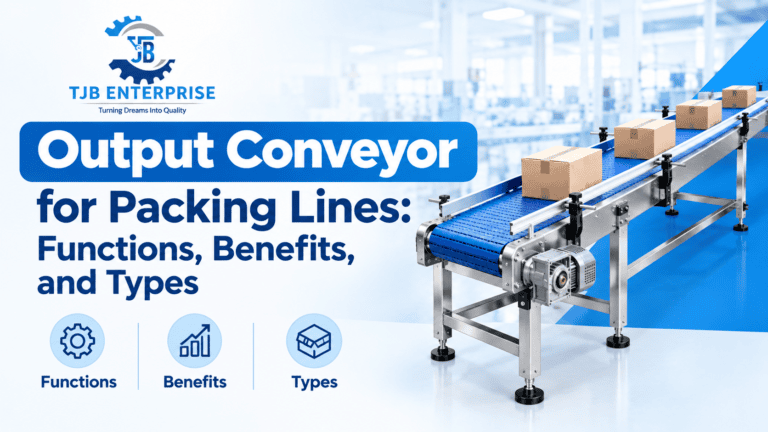
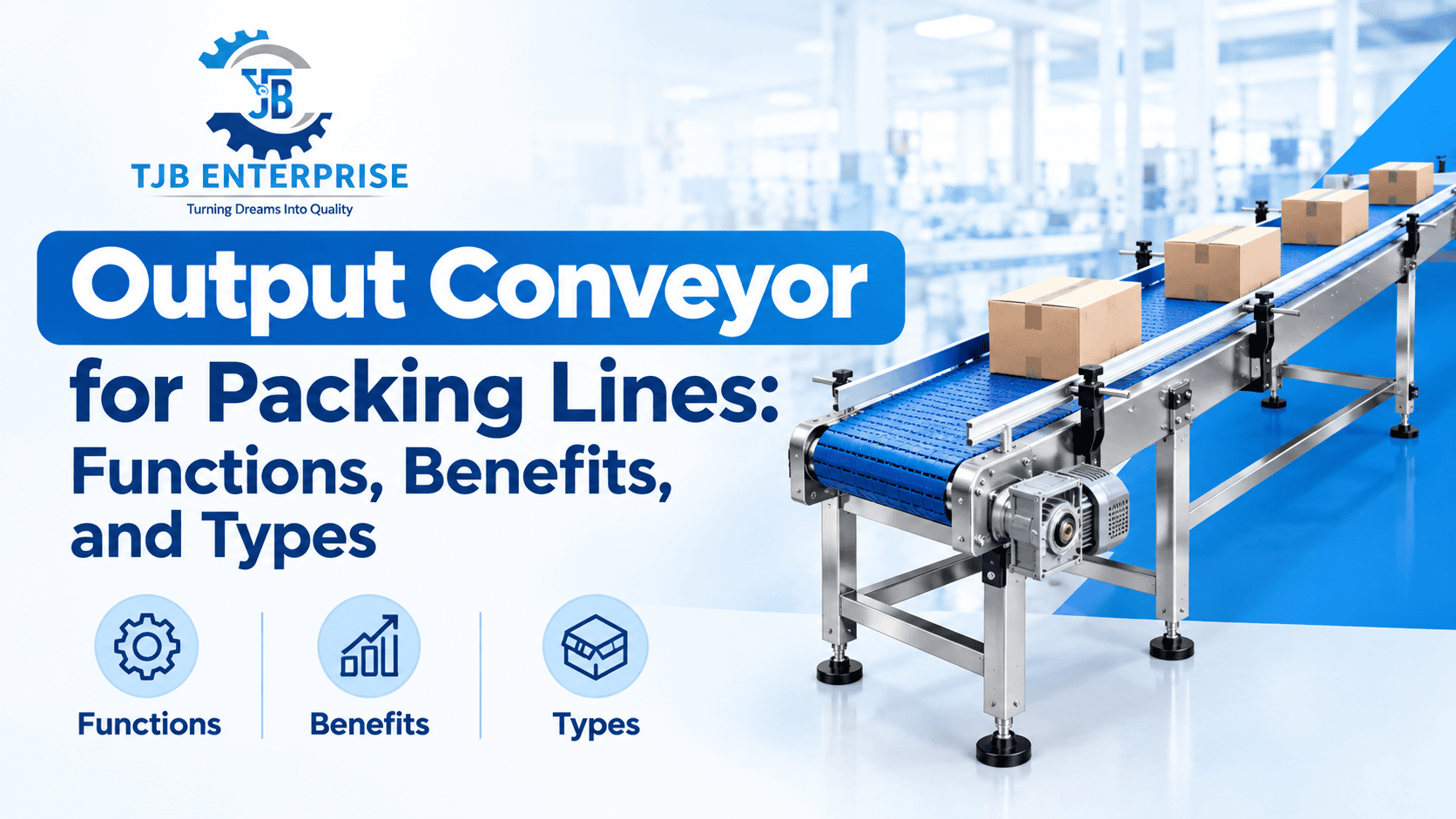
An output conveyor is a conveyor that carries finished packs away from a packing machine to the next stage of the line. It receives sealed pouches, packets, or cartons as they drop from the machine. It then moves them forward in an orderly flow.
Many small plants let finished packs fall into a tub or onto a table. Workers then pick them up by hand. This slows the line and causes damaged packs. It also makes counting and checking harder.
An output conveyor machine fixes this problem. It gives every pack a clear path out of the machine. It also keeps the packing area tidy and the line moving without breaks.
A packaging machine output conveyor is a small part of the line, but it has a big effect. If it fails, the whole line backs up. If it runs well, packs reach inspection, weighing, or boxing on time.
TJB ENTERPRISE supplies conveying, weighing, and packing machines for daily industrial use. This guide explains how an output conveyor works, what it offers, and where it fits. It also covers the main types and what to check before you compare an output conveyor price in India.
What are the Key Functions of Output Conveyor?
The main job is simple. An output conveyor takes finished packs from the machine and delivers them to the next point in the line.
- Receiving the finished pack. The conveyor sits right below the machine outlet. Sealed packs drop onto the belt. The belt height is set so packs land gently.
- Moving packs forward. A motor drives the output conveyor belt at a steady speed. The pack travels along the belt without tipping or sliding. The speed can be matched to the machine output.
- Spacing the packs. The belt keeps a clear gap between each pack. This helps with counting, checking, and later handling. It also stops packs from piling up.
- Supporting inspection. Operators or machines can check packs as they move. A metal detector, checkweigher, or vision unit can sit along the path. Faulty packs can then be removed.
- Delivering to the next stage. The conveyor ends at a collection table, a cartoning point, or a boxing area. Packs arrive in a regular flow. This suits an output conveyor for end of line packaging.
- Protecting the pack. A smooth belt surface avoids scratches and dents. This matters for printed pouches and soft packs. It keeps the product looking neat for the shelf.
What are the Core Benefits of Output Conveyor?
The first benefit is a smoother line. Packs leave the machine in an orderly flow. Nothing waits on a table or in a bin.
- Lower labor needs. Workers no longer stand at the machine to catch and move packs. One person can manage the collection point. Staff can focus on quality checks and boxing.
- Fewer damaged packs. Packs no longer fall into a heap. They rest on a belt and move gently. This reduces torn seals, creases, and crushed corners.
- Cleaner work area. The belt carries packs away from the machine. Loose packs do not scatter on the floor. The packing area stays safer and easier to clean.
- Better counting and control. Packs pass one by one along the belt. Counting becomes easier. You can also add a counter or checkweigher on the same path.
- Higher line output. The packing machine does not stop because the outlet is blocked. This keeps production steady through the shift. A high-speed output conveyor suits fast machines that release many packs per minute.
- Simple design and upkeep. The conveyor has few moving parts. Routine checks of the belt, rollers, and motor take little time. Cleaning is quick, especially with a stainless steel frame.
- Flexible length and height. The conveyor can be built to suit your floor space and machine outlet. This makes it easy to add to an existing line.
- Good value. It is a small investment compared with the main machine. It often pays back through saved labor and fewer damaged packs.
How Does an Output Conveyor Boost Efficiency in a Fully Pneumatic Two Head Packing Machine?
In a Fully Pneumatic Two Head Packing Machine, the output conveyor plays a key role in streamlining the final stage of the packaging process. After the two weigh-filler heads accurately dose product (50 g to 1 kg) and the machine seals the laminated film pouches, the finished packs are discharged onto the output conveyor. This belt system smoothly transports the sealed pouches away from the machine for collection, inspection, secondary packing, or carton filling. By automating product removal, it prevents accumulation at the discharge point, maintains continuous high-speed operation (8–14 pouches per minute), reduces manual handling, and improves overall line hygiene and productivity.
Common Applications of Output Conveyor
An output conveyor suits any packing line that produces finished packs in a steady stream. It is used across many industries.
Food and snacks:
- Namkeen, chips, and puffed snacks
- Spices, flour, and masala powders
- Rice, pulses, sugar, and salt
- Tea, coffee, and dry fruits
An output conveyor for food packaging usually uses a food-safe belt and a stainless steel frame. This keeps cleaning simple and protects product quality.
Pouch packing lines:
- Vertical form fill seal machines
- Collar type pouch machines
- Auger filler pouch machines
An output conveyor for pouch packing machine setups carries sealed pouches away from the cutter. It gives the pouches a clean exit and a regular gap.
Household and chemical products:
- Detergent powder packs
- Cleaning product sachets
- Small chemical pouches
Agriculture and pet products:
- Seed packets
- Feed and pet food pouches
End of line stations:
- Checkweighing and metal detection
- Date coding and labeling
- Cartoning and case packing
In each case, the conveyor connects the packing machine to the next step. This makes the whole line run as one system.
Common Types of Output Conveyor
Output conveyors come in several designs. The right type depends on your pack, line speed, and space.
- Flat belt conveyor. A flat belt carries packs on a smooth surface. It is the most common type. It suits pouches, packets, and cartons.
- Inclined output conveyor. The belt rises at an angle. It lifts packs to a higher collection table or machine. It suits plants with a raised next stage.
- Cleated belt conveyor. Small raised bars on the belt keep packs from sliding. This suits lightweight packs and inclined runs.
- Roller conveyor. Packs travel over rotating rollers. It suits cartons and heavier packs. Packs can also move by gravity on a slight slope.
- Slat conveyor. Linked slats form the moving surface. It suits heavy or irregular packs and tough working conditions.
- Stainless steel conveyor. The frame and parts are made of stainless steel. It suits food, pharma-related, and wet cleaning areas.
- Mild steel conveyor. A painted mild steel frame suits general industrial use. It is a practical choice where hygiene needs are lower.
- High-speed conveyor. A strong drive and a well-balanced belt keep packs stable at high speed. It suits fast packing machines.
- Custom-built conveyor. Length, width, height, and belt type are made to your needs. This helps when the line layout is tight or unusual.
What to Check Before You Buy
A few points help you choose the right conveyor. Share them with your supplier at the start.
- Pack size and weight. Give the length, width, and weight of your pack. This decides the belt width and motor size.
- Line speed. State how many packs your machine releases per minute. The belt speed must match this rate.
- Belt material. Choose a belt that suits your product. Food packs need a food-grade surface. Oily packs may need a different material.
- Frame material. Pick stainless steel for hygiene-sensitive products. Mild steel works for general use.
- Length and height. Measure the space between the machine outlet and the next stage. A good fit avoids later changes.
- Output conveyor price in India. The cost depends on length, width, belt type, frame material, and motor. Extra features such as speed control or side guards also change the price. A quotation based on your actual need gives the clearest figure.
If you are looking for an output conveyor supplier in India, compare more than price. Check build quality, spare part support, and service response. Ask about trials and installation help. A supplier that understands packing lines gives better advice on fit and speed.
FAQ
- What is an output conveyor used for?
An output conveyor carries finished packs away from a packing machine. It moves them to inspection, counting, or boxing. It keeps the line organized and prevents pack damage. - Which output conveyor suits a pouch packing machine?
A flat belt conveyor works for most pouches. A cleated belt helps when the conveyor rises at an angle. Match the belt width and speed to your pouch size and machine output. - Can one output conveyor work with a high-speed packing machine?
Yes, if it is built for that speed. A high-speed output conveyor needs a strong drive and a stable belt. Share your packs per minute with the supplier so they can size it correctly. - What affects the output conveyor price in India?
Price depends on length, width, belt type, frame material, and motor rating. Stainless steel costs more than mild steel. Extra features such as speed control also add to the cost. Ask for a quote based on your line. - Does TJB ENTERPRISE supply output conveyors with packing machines?
TJB ENTERPRISE supplies conveying, weighing, and packing machines. You can pair an output conveyor with a weigher and a pouch packing unit. Share your product and output needs to get a suitable recommendation and quotation.