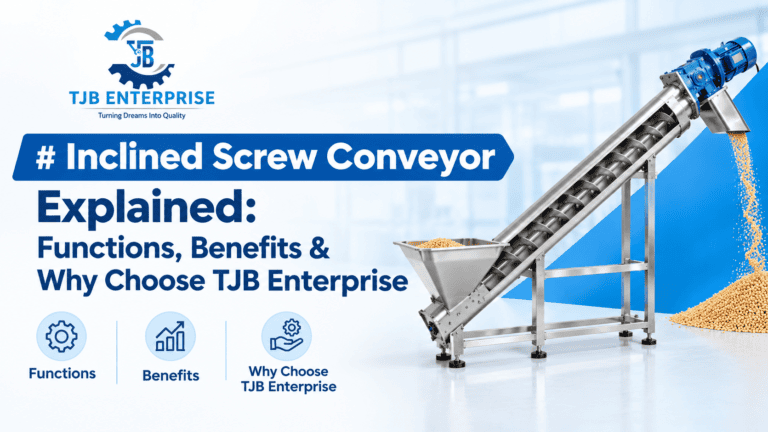
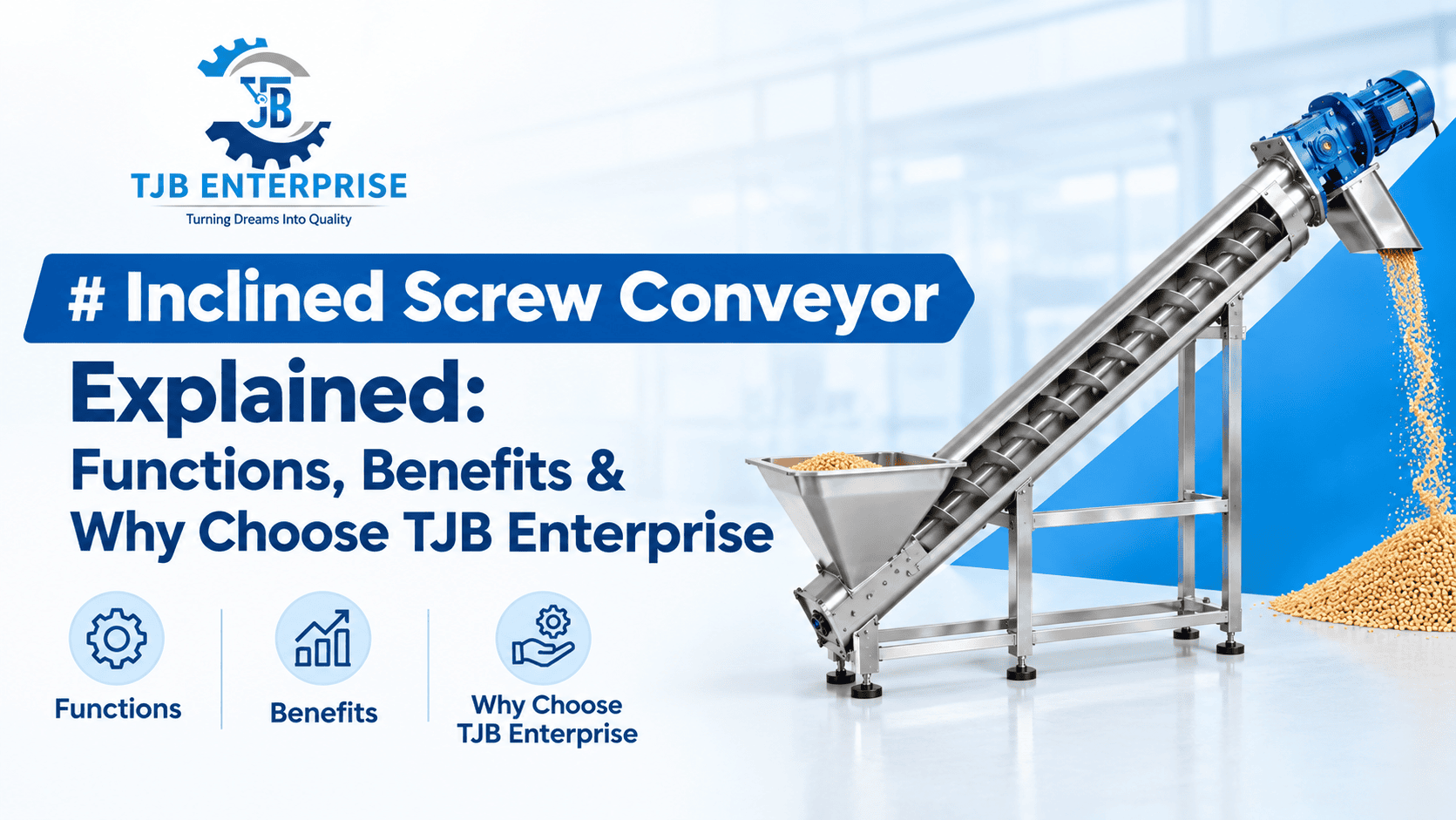
An inclined screw conveyor is a machine that lifts bulk material along a slope using a rotating screw inside a closed tube or trough. The screw turns, and the material moves steadily upward. It is also called an inclined auger conveyor.
Many plants still move material by hand or with open belts. This is slow and messy. It also leads to spillage, dust, and uneven feeding into the next machine.
An inclined screw conveyor machine solves these problems with a simple, enclosed design. It takes product from a low point and delivers it to a higher one at a controlled rate. It fits easily into food, chemical, and packing lines.
The machine is popular because it is practical. It has a small footprint and a straightforward build. It also asks for very little attention once it is set up.
This guide explains how the conveyor works, what it offers, and where it is used. It also covers the main types and what to check before you compare an inclined screw conveyor price in India.
What are the Key Functions of an Inclined Screw Conveyor?
The main job is to move material upward at an angle with steady, controlled flow. It does this without lifting by hand.
- Receiving the material. Product enters at the lower end. An inclined screw conveyor with hopper holds a stock of material and feeds it into the screw. This keeps the supply even.
- Moving the product upward. A motor turns the screw. The flights push the material along the tube and up the slope. The speed can be set to match your line.
- Controlling the flow rate. The screw speed decides how much product moves per minute. This gives a consistent feed to the next stage. It also reduces sudden surges.
- Discharging at the top. The material leaves through a discharge outlet at the upper end. It drops into a weigher, filler, mixer, or storage bin. The outlet can be placed to suit the machine below.
- Enabling automatic feeding. An inclined screw conveyor for automatic feeding can work with level sensors. It starts when the hopper below needs product. It stops when the hopper is full.
- Keeping the product protected. The closed tube shields material from dust and outside contamination. It also keeps the working area cleaner. This matters most for food and fine powders.
- Linking machines in a line. The conveyor connects storage, weighing, and packing. It removes the need for workers to carry products between stages. This keeps the whole line moving in sequence.
What are the Core Benefits of an Inclined Screw Conveyor?
The biggest benefit is simple, reliable lifting in a compact space. The machine takes little floor space. It suits plants where space is limited.
- Lower labor needs. Workers no longer carry sacks or buckets to the next level. One operator can watch the whole process. Staff can focus on quality checks and packing.
- Steady and even feeding. The screw delivers material at a regular rate. This helps weighers and packing machines work with better accuracy. Even feeding also means fewer stoppages.
- Less spillage and dust. The enclosed design keeps the product inside the system. You waste less material. The floor stays cleaner and safer.
- Easy automation. An automatic inclined screw conveyor can link with sensors and controllers. It can run with little attention. This suits modern production lines.
- Simple design and upkeep. The machine has few moving parts. Routine checks are quick. Cleaning is straightforward, especially in a stainless steel build.
- Flexible layout. Length, angle, and discharge point can be set to suit your plant. This makes it easy to fit into an existing line. You do not need to redesign your floor plan.
- Good value. Compared with larger lifting systems, it is often a practical and budget-friendly choice. The final cost still depends on size and build. Many small and mid-size units find it a sensible first step in automation.
- Safer working area. Moving parts stay inside the casing. Workers have less contact with the product and the screw. This lowers handling risk.
How Does an Inclined Screw Conveyor Improve Feeding in a Half Pneumatic Auger Filler Packing Machine?
In a Half Pneumatic Auger Filler Packing Machine, the inclined screw conveyor serves as an essential optional feeding system for sticky powder products. It uses a rotating helical screw inside an enclosed tube to gently lift and transfer powder from a ground-level hopper up to the machine’s auger filler hopper at a controlled rate.
This ensures a continuous and consistent product supply, maintains stable head pressure for accurate servo-driven dosing (±1–2%), minimizes manual handling, and reduces dust or contamination. By integrating seamlessly with the packing line, the conveyor boosts efficiency, supports smooth operation for 50g–500g fills, and enhances overall hygiene and productivity in powder packaging applications.
Common Applications of Inclined Screw Conveyor
An inclined screw conveyor suits powders, granules, and small free-flowing pieces. It is used in many industries.
Food and snacks:
- Spices, flour, and masala powders
- Sugar, salt, and tea
- Rice, pulses, and grains
- Namkeen and small snack pieces
Chemicals and industrial goods:
- Detergent powder
- Fertilizer granules
- Plastic granules and resin
Agriculture and feed:
- Seeds and grains
- Animal feed and pellets
Packing lines:
- Feeding a multi head or linear weigher
- Feeding an auger filler or pouch machine
An inclined screw conveyor for packaging machines is one of the most common uses. It keeps the hopper above the packing unit supplied at all times. This avoids stoppages caused by empty hoppers.
The conveyor also helps in batching and mixing plants. It moves ingredients from a loading point to a mixer at a set rate. This makes each batch more consistent.
Material type matters. Very sticky, wet, or fragile products may need a special design. Always share your product details with the supplier before ordering.
Common Types of Inclined Screw Conveyor
Inclined screw conveyors come in several designs. The right type depends on your material, length, and working conditions.
- Tube type. The screw runs inside a closed pipe. This design suits fine powders and dusty products. It keeps the material fully enclosed.
- U-trough type. The screw sits in an open-top trough with a cover. It suits bulkier or heavier material. It is also easy to inspect and clean.
- Shafted screw conveyor. A central shaft carries the screw flights. It gives strong support for long runs and heavier loads.
- Shaftless screw conveyor. The screw has no central shaft. It handles sticky or stringy material that could wrap around a shaft.
- Hopper-fed type. This version includes a feed hopper at the base. It suits automatic feeding and steady batch supply. It is a common pick for packing lines.
- Stainless steel and mild steel builds. Stainless steel suits food and pharma-related use. Mild steel suits general industrial work. Your product and cleaning needs decide the better option.
- Flexible screw type. This design uses a flexible spiral inside a tube. It can follow a curved path. It suits tight layouts and fine powders.
Why Choose TJB ENTERPRISE?
TJB ENTERPRISE supplies conveying, weighing, and packing machines for daily industrial use. The focus is on dependable performance, simple operation, and real support after the sale.
- Advice that fits your product. The team asks about your material, slope, and output target. They then suggest a suitable design. You avoid paying for features you will not use.
- Built for long working hours. Strong construction and reliable drive parts keep downtime low. A clean design makes washing and inspection easier.
- Clear pricing. Inclined screw conveyor price in India depends on length, diameter, material of build, and motor rating. Extra features like a hopper, sensors, or a control panel also change the cost. TJB ENTERPRISE prepares a quotation based on your actual need.
- Full line support. You can pair the conveyor with a weigher and a pouch packing unit. This avoids compatibility problems later. It also gives you one contact for service.
- Help after installation. Installation guidance, spare parts, and operator support keep your line running.
Before you choose any inclined screw conveyor supplier, check a few basics. Ask about the build material, motor rating, and screw design. Ask whether a product trial is possible. Also confirm how fast the team responds to service calls.
Buyers searching for inclined screw conveyor exporters India should ask about more points. Check packing quality, export documentation, and shipping support. A supplier with clear communication makes overseas orders far easier.
Send your product details to TJB ENTERPRISE for a clear recommendation and quotation.
FAQ
- What is an inclined screw conveyor used for?
It is used to lift powders, granules, and small pieces from a lower point to a higher one. It is common in food, chemical, feed, and packing plants. It often feeds weighers, fillers, and mixers. - What is the difference between an inclined screw conveyor and an inclined auger conveyor?
They are the same machine. Auger conveyor is simply another name for a screw conveyor. Both use a rotating screw to move material along a slope. - Can an inclined screw conveyor work with packaging machines?
Yes. It keeps the hopper of the packing machine supplied with product. With a level sensor, it can run automatically. Confirm hopper height and feed rate with your supplier before ordering. - What affects the inclined screw conveyor price in India?
Price depends on length, screw diameter, build material, motor rating, and extra features such as a hopper or sensors. Stainless steel builds cost more than mild steel. A quotation based on your product gives the most accurate figure. - What products should not be handled by a screw conveyor?
Very fragile products can break inside the screw. Extremely sticky or wet material may clog the flights. Test your product first, or ask for a design suited to it.